
The building
A 1906 furniture factory, now 103 homes
Two brick warehouses the Harbach family built for furniture, converted into apartments in 2016 with the brick, timber and steel left in place.
Built for furniture
Louis Harbach arrived in Des Moines as a teenager and learned cabinet making by hand, then by machine. By 1882 the firm he built with his brother had grown into a 150-person furniture factory, one of the largest in Iowa. The family business, founded in 1856, raised these two five-story brick warehouses in 1906 and used them until 1928.
The words L. Harbach Sons Co. Wholesale Furniture Warehouse are still painted on the brick, legible from the street more than a century later.
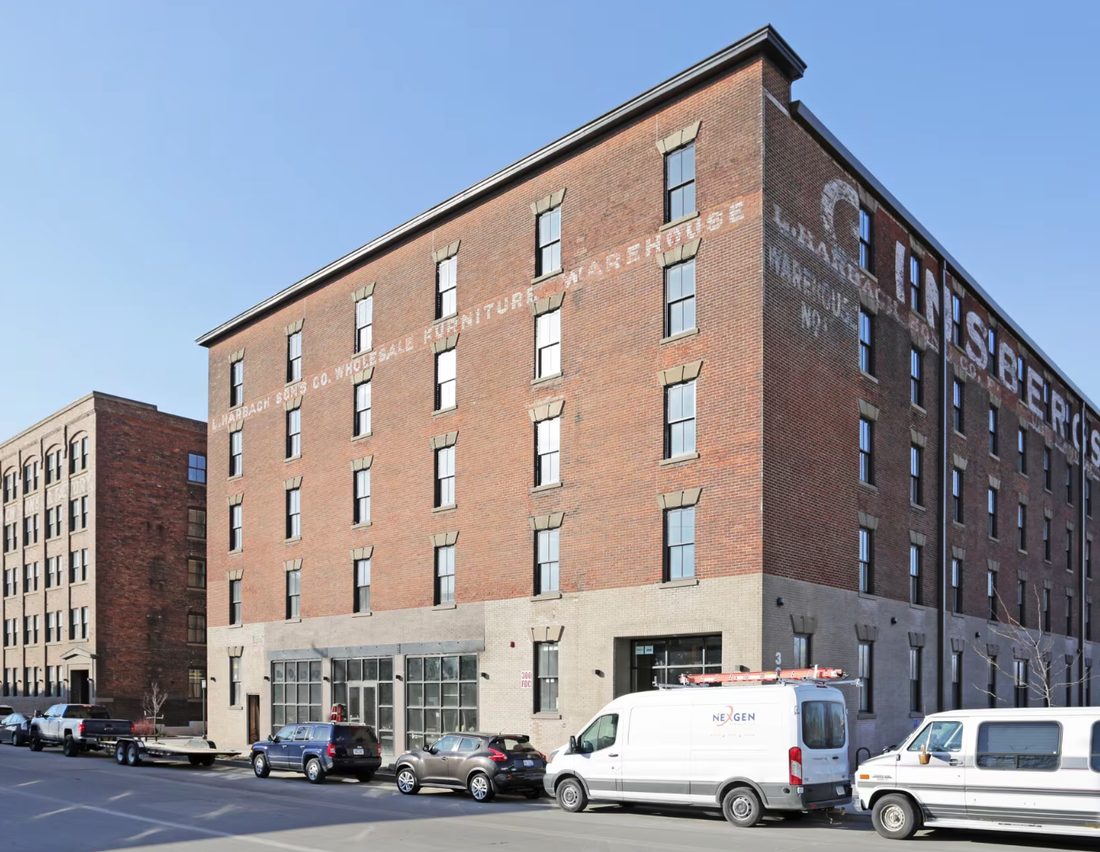
What the 2016 renovation kept
- The steel doors, still on their hinges
- The timber trusses that hold the roof
- Exposed brick and oversized steel-frame factory windows, in many of the homes
- The link between the two buildings: where a loading dock once joined them, a glass-roofed courtyard does the job now, for residents instead of freight
The conversion made 103 homes: 19 studios, 62 one-bedrooms and 22 two-bedrooms. Because the buildings were laid out for furniture, not apartments, the floor plans vary widely. One-bedrooms alone run from 427 to 821 square feet.
Recognition
Questions people ask
Is Harbach Lofts a converted warehouse?
Yes. It is the L. Harbach and Sons Furniture Warehouse and Factory Complex, two five-story brick buildings from 1906, converted into 103 apartments in 2016.
Is the building on the National Register of Historic Places?
Yes. The complex was added to the National Register of Historic Places in 2015, and the renovation received Preservation Iowa's top multifamily honor in 2019.
Does every home have exposed brick?
Many do, along with the original oversized steel-frame windows, but it depends on the home. Ask the leasing team which open homes have the features you want.